Sports Injury Treatment in Bangalore
If you’re looking for a Sports Injury Surgeon in Bangalore, the priority is fast, accurate diagnosis and a safe return-to-sport plan. At Opera Bone and Joint Clinic, we provide the best sports injury treatment in Bangalore through a structured approach—assessment, imaging review when needed, rehab-first care, and surgery only when it clearly improves stability and function.
Types of Sports Injuries We Treat
Labrum Tears
Labrum injuries can cause deep shoulder pain, clicking, weakness, or repeated “slipping,” especially during lifting or throwing. We confirm the injury pattern clinically and with MRI when required, then guide rehab or arthroscopic repair if instability persists.
Elbow Injuries: Tennis Elbow, Golfer’s Elbow & More
Elbow pain often starts from repetitive gripping, racquet swings, gym training, or throwing and worsens with continued overload. Treatment for elbow usually includes activity correction, bracing, and physiotherapy; persistent cases may need injections or ligament evaluation.
Meniscus Tears and Knee Injuries
Meniscus tears commonly follow a twist and may cause swelling, joint-line pain, clicking, or locking. Many improve with rehab; if there’s locking/catching or an unstable tear, arthroscopic repair may be needed.
Related topic: ACL treatment Bangalore | Meniscus surgery Bangalore
ACL and MCL Ligament Injuries
ACL/MCL injuries can cause early swelling and a “giving way” feeling during walking, stairs, or sport. We decide treatment based on tear grade, sport demands, and associated injuries; early consultation by finding a quick search of a ligament doctor near me prevents repeat damage.
Rotator Cuff Injuries
Rotator cuff problems often cause pain while lifting the arm, weakness, and night pain. Rehab is first-line in many cases, while larger tears or persistent weakness may need surgery for reliable function. Delay in treatment may lead to unforeseen complications; therefore, it is recommended to consult a rotator cuff repair specialist in Bangalore who can guide you on the next steps for diagnosis.
Sprains and Strains
Sprains (ligaments) and strains (muscles/tendons) are common and usually respond well when treated early. We focus on swelling control, graded rehab, and return-to-sport progression to reduce recurrence.
Fractures and Bone Injuries
Sports fractures may occur from falls, collisions, or direct impact, while stress fractures arise from overtraining. Accurate diagnosis and correct immobilization/rehab planning are key for safe healing and return to activity.
Tendinitis and Overuse Injuries
Overuse injuries develop when training load exceeds recovery, leading to tendon pain and reduced performance. We correct biomechanics, manage load, and build strength; selected cases may benefit from advanced therapies.
Dislocations
Dislocations—especially shoulders—can leave ongoing instability even after the joint is put back. Rehab strengthens stabilizers; recurrent episodes may need stabilization surgery.
Related topic: Shoulder dislocation treatment Bangalore.
Concussions
Concussions can cause headache, dizziness, nausea, brain fog, or sensitivity to light after impact. We guide rest and graded return-to-play, and recommend urgent review if red flags appear.
Causes of Sports Injuries
Overuse and Repetitive Motion
Repeated stress from running, jumping, throwing, or gym training overloads tendons and joints over time. Early assessment by a sports medicine dr helps stop progression from mild pain to chronic injury.
Improper Technique and Form
Poor landing mechanics, incorrect lifting posture, and faulty sports technique increase strain on ligaments and tendons. Technique correction plus rehab is often the fastest route to the best sports injury treatment in Bangalore outcomes.
Accidents and Impact
Falls, collisions, and sudden twists can cause ligament tears, meniscus injuries, fractures, and dislocations. Quick evaluation at an injury sports clinic prevents missed injuries and delays in recovery.
Environmental Factors
Hard courts, uneven surfaces, wrong footwear, and poor lighting raise injury risk—especially for ankles and knees. Preventive guidance and strengthening reduce recurrence for active individuals.
Lack of Conditioning
Weak core/hips, low flexibility, and inadequate warm-up increase risk even in regular gym-goers. A structured conditioning plan is a key part of care at a center for sports injury.
Symptoms of Sports Injuries: How to Recognize the Signs
Pain and Swelling
Pain with swelling after an injury may indicate ligament damage, meniscus injury, or fracture depending on the mechanism. Early assessment reduces downtime and improves outcomes.
Limited Range of Motion
Inability to fully bend/straighten can be due to swelling, muscle spasm, or a mechanical block like meniscus tear. Persistent stiffness needs evaluation and guided rehab.
Bruising and Discoloration
Bruising can occur with muscle tears, ligament injuries, or impact trauma and may spread over 24–48 hours. If bruising comes with weakness or instability, consult a sports doctor near me.
Instability or Weakness
“Giving way” suggests ligament injury (ACL/ankle) or shoulder instability, and persistent weakness may suggest tendon tear. If you’re searching for the best sports injury doctor in Bangalore, instability is a strong reason to visit early.
Non-Surgical Treatment Options for Sports Injuries
Physical Therapy and Rehabilitation
Rehab restores mobility, strength, balance, and sport-specific control in phases. A good plan from a sports medicine specialist near me reduces re-injury risk and avoids unnecessary surgery.
PRP Therapy: Platelet-Rich Plasma Treatment
PRP may be considered for selected tendon/ligament overuse problems when standard rehab isn’t enough. It works best when paired with structured physiotherapy and correct load management.
Injections for Pain Management
Targeted injections can reduce inflammation and pain to help rehab progress. They are chosen after diagnosis and used as support—not a replacement for physiotherapy.
Bracing and Taping for Joint Support
Bracing and taping provide temporary support and improve confidence during early recovery. We combine support with strengthening so you don’t become dependent on braces long-term.
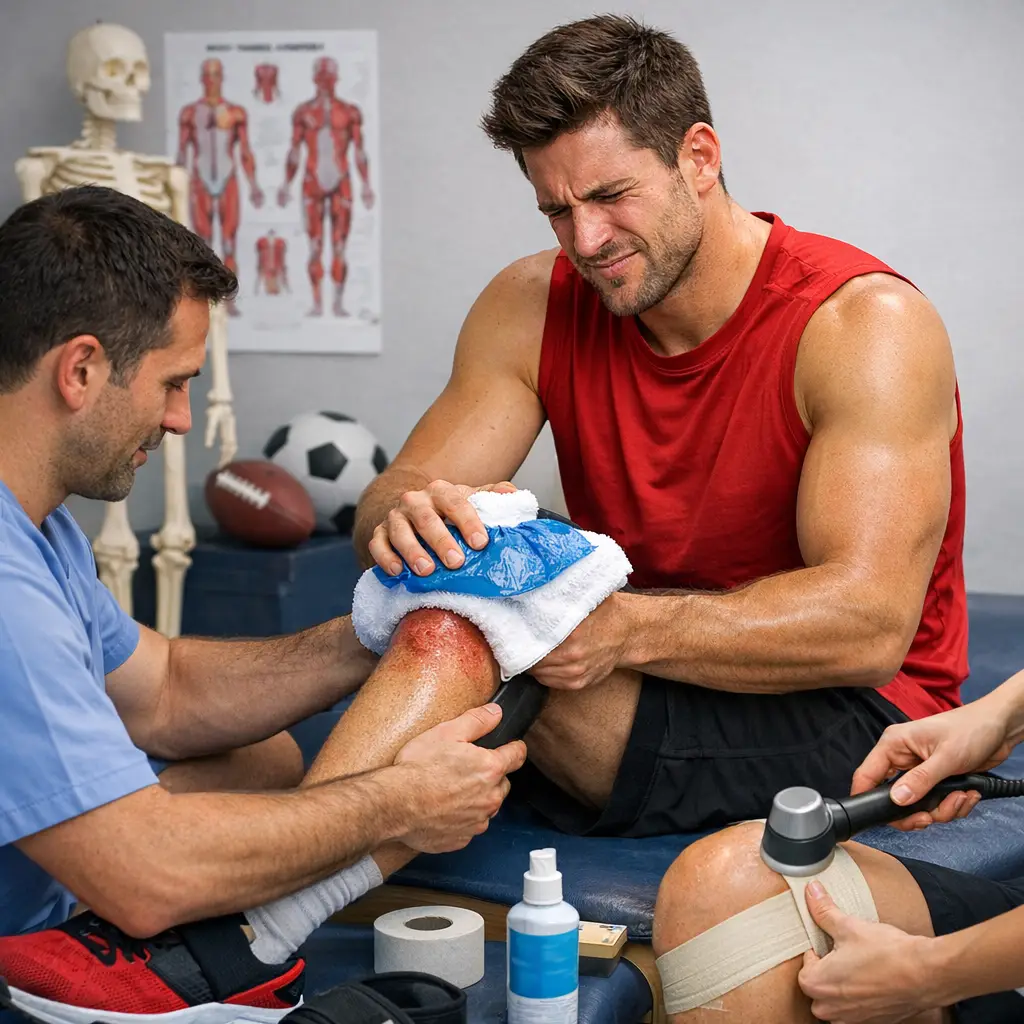
R.I.C.E. – Rest, Ice, Compression, Elevation
R.I.C.E. helps control swelling and pain in the first 24–72 hours after many sprains/strains. After the acute phase, guided movement and rehab usually speed recovery.
Surgical Treatment for Sports Injuries: When is it Necessary?
Surgery is considered when there is persistent instability, mechanical locking, significant tears, or failed non-surgical care. The goal is stable function and long-term joint protection, supported by rehab at an injury sports clinic.
Labrum Repair Surgery
Arthroscopic labrum repair is advised when instability or mechanical symptoms persist despite proper rehab. Post-op rehab restores range, strength, and safe return to overhead sports.
Meniscus Repair Surgery
Meniscus repair is preferred when possible to preserve knee cushioning and reduce long-term wear. Surgery is recommended for unstable tears or persistent locking/catching symptoms.
Elbow Surgery for UCL Reconstruction
UCL reconstruction may be required for throwing athletes with confirmed ligament instability and failed rehab. The plan includes staged rehab and sport-specific throwing progression.
ACL and MCL Reconstruction Surgery
ACL reconstruction is often chosen when instability is significant in active individuals or pivoting sports, especially with meniscus/cartilage injury. MCL often heals with bracing, but combined injuries may need surgery.
Why Choose Dr Ponnanna KM for Sports Injury Treatment in Bangalore
Experienced Orthopedic Surgeons and Sports Medicine Experts
Our Sports orthopedic and sports medicine dr approach focuses on accurate diagnosis and practical return-to-sport planning. Patients choose us when they want clear options, not generic advice.
State-of-the-Art Diagnostic and Treatment Facilities
We use clinical examination plus imaging review (X-ray/MRI) when needed to confirm the injury and guide treatment. This helps reduce missed injuries and speeds recovery planning at a center for sports injury.
Customized Recovery Plans for Athletes
Your rehab plan is tailored to your sport, position, timeline, and injury severity. This personalized approach supports safer, faster return with fewer setbacks.
How We Help You Recover Faster: Personalized Care for Athletes
Tailored Rehabilitation Programs
Recovery is planned in phases—pain control, mobility, strength, and sport-specific performance. Each phase has measurable milestones so you know when it’s safe to progress.
Advanced Recovery Techniques
When appropriate, we add supportive bracing, targeted injections, and load-management strategies to improve rehab outcomes. The aim is safe speed with lower re-injury risk.
Focus on Quick Return to Sport
Return-to-sport depends on stability, strength symmetry, movement control, and confidence—not only time. We guide progression so you return stronger and safer.
Dr. Ponnanna KM shares essential tips for preventing common sports injuries. Watch the reel for expert advice and Patient Case Study
Contact Us for Sports Injury Treatment in Bangalore
Schedule Your Consultation Now
If you’re looking for a reliable injury sports clinic and center for sports injury, book your consultation early to reduce downtime and prevent worsening.
Get Personalized Care from Our Experts
For athletes and active adults searching for the best sports injury doctor in Bangalore, we provide diagnosis clarity and a stepwise plan that fits your sport and lifestyle.
FAQs
1. I twisted my knee. Is it always an ACL tear?
Not always—twisting can cause meniscus tear, MCL sprain, cartilage injury, or ACL tear. An exam and imaging (if needed) confirm the diagnosis.
2. What types of sports injuries do Dr Ponnanna KM treat?
ACL/MCL injuries, meniscus tears, shoulder labrum/rotator cuff issues, elbow injuries, ankle sprains, and sports-related fractures are commonly treated. Care is tailored by a Sports orthopedic and sports medicine dr approach.
3. How quickly should treatment start after an injury?
Ideally within 24–72 hours for acute injuries for swelling control and correct diagnosis. Early care usually shortens recovery time.
4. When can I return to walking or sports, is surgery avoidable, and what are the risks of delaying treatment?
Timelines depend on injury severity; many avoid surgery with proper rehab, but delays can worsen instability and increase cartilage/meniscus damage. Early evaluation helps choose the safest path.
5. How do I know if my injury needs a sports specialist?
If there’s swelling, instability, locking, severe pain, inability to bear weight, or symptoms beyond 10–14 days, consult a sports medicine specialist near me.
6. Do all sports injuries require surgery?
No—many recover with physiotherapy, bracing, and load management. Surgery is reserved for instability, mechanical symptoms, major tears, or failed conservative care.
7. What advanced treatments/consultation are available at Opera Bone and Joint Clinic, Bangalore?
Sports injury evaluation, imaging review and explanation, structured rehab planning, injections when appropriate, and arthroscopy-based surgical care when needed.
8. How is Dr Ponnanna KM different from other sports injury specialists in Bengaluru?
A joint-preservation mindset with accurate diagnosis, rehab-first planning, and clear recovery milestones—plus arthroscopy expertise when surgery is required.
DR. PONNANNA K.M
Best Orthopedic Surgeon in Bangalore – Specializing in Shoulder, Hip, and Knee Care
Consultant Arthroscopy & Joint Replacement Surgeon
Dr. Ponnanna K.M is an internationally fellowship-trained Orthopedic Surgeon in Bangalore specializing in shoulder, hip, and knee care.
Expert in advanced arthroscopy and joint replacement, he delivers precision-driven, minimally invasive treatments.
Known for accurate diagnosis and patient-first care, he focuses on long-term mobility and pain relief.
Trusted for safe outcomes and surgical excellence.