
Why Long‑Term Results Matter: Knee Replacement Longevity and Patient Outcomes
Long‑term studies consistently show excellent results for knee replacements, with most functioning well at 10 years or more. Research indicates that 90–95 % of knee implants remain functional 10 years after surgery, helping patients maintain mobility and quality of life without significant pain.
How the Surgery Restored Pain‑Free Movement and Daily Function
Dr. Ponnanna’s surgical technique ensures precise alignment and prosthetic placement, which are crucial for long‑term joint function. Proper knee alignment reduces stress on the implant, leading to sustained pain relief, improved gait, and restored ability to perform everyday activities like walking long distances, climbing stairs, and standing for prolonged periods. This has allowed the patient to live independently and actively even after a decade.
Busting the Myth: Knee Replacements Last Decades, Not Just Years
A common belief is that knee replacements are short‑lived. This patient’s story — thriving 10 years after bilateral knee replacement — proves otherwise. Modern implant design combined with expert surgical technique can lead to long‑lasting joints, often exceeding a decade of excellent function when paired with proper post‑operative care.
Patient Testimonial: Active, Pain‑Free, and Living Life to the Fullest
“They said knee replacements don’t last long… 10 years later, he’s proving them wrong.” This real‑life testimony highlights the confidence and mobility regained after successful bilateral knee replacement surgery, showcasing a life transformed without the daily pain and limitations the patient once faced.
Different Types of Knee Joint Replacement Surgery Offered at Opera Bone and Joint Clinic
Every knee is different, so the procedure must match the pattern of damage, alignment, and ligament stability. The type of surgery also influences the cost of knee surgery in Bangalore and recovery timelines.
Total Knee Replacement (TKR)
Best for advanced, multi-compartment arthritis where the knee joint surface is significantly damaged.
Learn more:
Unicondylar (Partial Knee) Replacement
Suitable when arthritis is limited to one compartment and the rest of the knee remains healthy. This can allow a more natural feel and faster early recovery in selected patients.
Learn more:
Bilateral Knee Replacement
Recommended when both knees are severely affected. It may be performed together or in stages based on medical fitness and safety.
Revision Knee Replacement
Done when an old implant wears out, loosens, becomes unstable, or when pain persists and requires re-evaluation and correction.
Learn more:
Minimally Invasive Knee Replacement
A technique where soft-tissue disruption may be reduced in suitable cases, supporting smoother early mobility and rehabilitation.
Specialized Treatments & Technologies for Knee Replacement
Better technology improves precision, safety, and consistency—especially for complex alignment or deformity cases.
Pixee Navigation Knee Replacement in Bangalore
Pixee navigation is an augmented-reality guided system that supports the surgeon with real-time visual alignment targets during knee replacement. It helps improve precision in bone cuts and implant positioning, which can contribute to better knee balance, stability, and long-term performance—particularly important for patients with deformity or advanced arthritis.
Safer Knee Replacement Surgery in Bangalore
Safety is not one single step—it’s a complete protocol. At Opera Bone and Joint Clinic, safer knee replacement surgery in Bangalore is supported through:
- careful pre-operative assessment (fitness, diabetes control, heart/lung evaluation if required)
- infection-prevention protocols
- precision alignment techniques to reduce implant-related complications
- blood loss management strategies
- early mobilization and guided physiotherapy
- structured follow-up to monitor wound healing, swelling, range of motion, and walking pattern
This approach is designed to reduce complications and support a smoother recovery for patients of different age groups.
Treatment of Cartilage Damage in the Knee
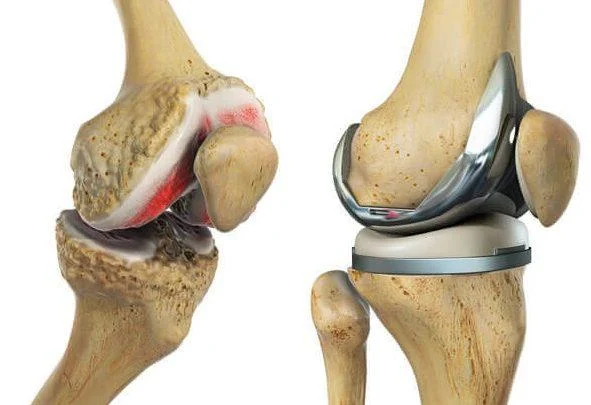
Cartilage is the smooth protective surface that allows the knee joint to glide without friction. When cartilage wears out (commonly due to osteoarthritis), the bones begin to rub against each other—leading to pain, swelling, stiffness, and reduced walking distance.
In early stages, cartilage damage may be managed with physiotherapy, weight optimization, braces, injections, and activity modification. But when cartilage loss becomes advanced and daily function is affected, knee replacement surgery can rebuild the joint surface with durable implants—helping reduce pain and restore mobility.
What Post-Operative Care Is Needed After Knee Joint Replacement Surgery?
Recovery quality depends heavily on rehabilitation and home care. Typical post-operative care includes:
- walking with support within the first 24–48 hours (as advised)
- swelling control using elevation and ice
- wound care and infection warning signs monitoring
- pain management and blood clot prevention medicines
- physiotherapy for knee bending (range of motion), strengthening, and gait training
- graded return to daily activities like stairs, driving, and work based on progress
A structured rehab plan helps patients return to confident movement and reduces stiffness.
Knee Replacement Surgery Package Cost in Bangalore
The knee replacement surgery cost in Bangalore varies based on multiple factors. In Bangalore, an estimated range is often ₹1.8 lakhs to ₹4.5+ lakhs per knee, depending on:
- type of surgery (total vs partial vs revision)
- implant brand/type and whether advanced alignment/navigation is used
- hospital category and room type
- surgeon’s expertise and complexity (deformity, stiffness, obesity, previous surgery)
- medical fitness, investigations, and post-op support needs
If you are checking knee surgery in Bangalore or knee surgery cost Bangalore, it’s important to compare what is included in the “package”—implant cost, surgeon fee, anesthesia, hospital stay, medicines, physiotherapy sessions, and follow-ups.
Cost-effective value compared to other hospitals in Bangalore:
At Opera Bone and Joint Clinic, the focus is on delivering high-quality outcomes with transparent guidance on what truly impacts cost—helping patients avoid unnecessary add-ons while still choosing the safest and most suitable technology for their knee condition.
Common Knee Conditions Treated by Dr Ponnanna KM
Triple Deformity of the Knee
Triple deformity usually refers to a knee with complex alignment issues—commonly a combination of bowing/knock-knee alignment changes, fixed bending (flexion deformity), and rotational or joint imbalance. These cases often cause severe pain, instability, uneven wear of cartilage, and difficulty walking.
Knee replacement can correct alignment, rebalance the knee, and restore functional movement—especially when deformity is advanced and conservative treatment no longer works. Precision techniques and navigation can be particularly helpful in such cases.
Knee Arthritis and Osteoarthritis Treatment
Knee arthritis (especially osteoarthritis) is one of the most common reasons for knee replacement in Bangalore. As arthritis advances, pain becomes frequent, stiffness increases, and walking distance reduces significantly. When X-rays show advanced joint space narrowing and cartilage loss, and daily life is impacted despite medicines and physiotherapy, knee replacement becomes one of the most effective long-term solutions to reduce pain and regain mobility.
FAQs
When can I start walking after knee replacement?
Will the surgery be painful?
There will be post-operative pain and swelling, but modern anesthesia, pain-control protocols, and physiotherapy make it manageable. Pain typically improves steadily over the first few weeks as mobility increases.
What is the cost of knee replacement surgery in Bangalore?
Knee replacement surgery cost in Bangalore commonly falls in the range of ₹1.8 lakhs to ₹4.5+ lakhs per knee, depending on the implant, hospital package, technology used, and patient factors like deformity or medical conditions.
How experienced is Dr. Ponnanna KM, the knee replacement surgeon?
Dr. Ponnanna K.M. is known for treating complex knee arthritis, deformities, and revision cases with structured planning and technology-supported precision. For profile details, visit here.
Is knee replacement surgery painful?
Pain is expected after surgery, but it is controlled with medicines, nerve blocks/advanced anesthesia methods (as advised), and guided physiotherapy. Most patients feel meaningful pain relief compared to pre-surgery arthritis pain as recovery progresses.
What is minimally invasive knee replacement surgery?
It is an approach that may reduce soft-tissue disruption and use smaller incisions in suitable patients. The goal is smoother early mobility and recovery while still achieving stable implant positioning.
How long does knee replacement surgery take?
It commonly takes around 60 to 120 minutes, depending on the complexity, deformity, and whether it is a primary replacement or revision procedure.
What are the common reasons people get knee replacement surgery?
Common reasons include advanced osteoarthritis, severe pain not responding to treatment, significant stiffness, reduced walking distance, deformity (bow legs/knock knees), instability, and cartilage loss affecting daily life.
Knee Replacement Surgery in Bangalore: Expert Treatment by Dr. Ponnanna
If knee pain is stopping you from walking, climbing stairs, or sleeping comfortably, knee replacement in Bangalore can be a life-changing option—especially when arthritis or cartilage loss has progressed beyond medicines and physiotherapy. At Opera Bone and Joint Clinic, Dr. Ponnanna K.M. focuses on restoring confident movement with modern techniques that improve alignment, stability, and long-term implant performance.
Whether you are researching knee replacement surgery cost in Bangalore, comparing hospitals, or looking for the best knee replacement surgeon in Bangalore for safer outcomes, this page explains who needs surgery, the options available, expected recovery, and the key factors that influence pricing—so you can make a clear decision with confidence.
Best Knee Replacement Doctor in Bangalore – Dr. Ponnanna K.M
Dr. Ponnanna K.M. is a trusted knee replacement surgeon in Bangalore known for structured pre-surgery planning, precision-focused implant positioning, and patient-friendly rehabilitation guidance. Patients commonly consult him when knee arthritis becomes severe, when deformity worsens over time, or when pain persists despite physiotherapy, injections, and lifestyle modification.
If you’re comparing options online while searching for the best knee replacement doctor in Bangalore, it’s important to look beyond ratings or popularity alone. Focus on factors such as accurate diagnosis, personalized surgical planning, implant selection, alignment precision, safety protocols, and structured post-operative rehabilitation, as these elements play a critical role in ensuring long-term knee function and a successful recovery.
Case Study: 10 Years After Bilateral Knee Replacement – Still Going Strong
Long-term results matter. This case study highlights how the right surgical plan, accurate alignment, and consistent post-operative care can support a stable knee and confident walking even 10 years after surgery.
Why Long‑Term Results Matter: Knee Replacement Longevity and Patient Outcomes
Long‑term studies consistently show excellent results for knee replacements, with most functioning well at 10 years or more. Research indicates that 90–95 % of knee implants remain functional 10 years after surgery, helping patients maintain mobility and quality of life without significant pain.
How the Surgery Restored Pain‑Free Movement and Daily Function
Dr. Ponnanna’s surgical technique ensures precise alignment and prosthetic placement, which are crucial for long‑term joint function. Proper knee alignment reduces stress on the implant, leading to sustained pain relief, improved gait, and restored ability to perform everyday activities like walking long distances, climbing stairs, and standing for prolonged periods. This has allowed the patient to live independently and actively even after a decade.
Busting the Myth: Knee Replacements Last Decades, Not Just Years
A common belief is that knee replacements are short‑lived. This patient’s story — thriving 10 years after bilateral knee replacement — proves otherwise. Modern implant design combined with expert surgical technique can lead to long‑lasting joints, often exceeding a decade of excellent function when paired with proper post‑operative care.
Patient Testimonial: Active, Pain‑Free, and Living Life to the Fullest
“They said knee replacements don’t last long… 10 years later, he’s proving them wrong.” This real‑life testimony highlights the confidence and mobility regained after successful bilateral knee replacement surgery, showcasing a life transformed without the daily pain and limitations the patient once faced.
Different Types of Knee Joint Replacement Surgery Offered at Opera Bone and Joint Clinic
Every knee is different, so the procedure must match the pattern of damage, alignment, and ligament stability. The type of surgery also influences the cost of knee surgery in Bangalore and recovery timelines.
Total Knee Replacement (TKR)
Best for advanced, multi-compartment arthritis where the knee joint surface is significantly damaged.
Learn more:
Unicondylar (Partial Knee) Replacement
Suitable when arthritis is limited to one compartment and the rest of the knee remains healthy. This can allow a more natural feel and faster early recovery in selected patients.
Learn more:
Bilateral Knee Replacement
Recommended when both knees are severely affected. It may be performed together or in stages based on medical fitness and safety.
Revision Knee Replacement
Done when an old implant wears out, loosens, becomes unstable, or when pain persists and requires re-evaluation and correction.
Learn more:
Minimally Invasive Knee Replacement
A technique where soft-tissue disruption may be reduced in suitable cases, supporting smoother early mobility and rehabilitation.
Specialized Treatments & Technologies for Knee Replacement
Better technology improves precision, safety, and consistency—especially for complex alignment or deformity cases.
Pixee Navigation Knee Replacement in Bangalore
Pixee navigation is an augmented-reality guided system that supports the surgeon with real-time visual alignment targets during knee replacement. It helps improve precision in bone cuts and implant positioning, which can contribute to better knee balance, stability, and long-term performance—particularly important for patients with deformity or advanced arthritis.
Safer Knee Replacement Surgery in Bangalore
Safety is not one single step—it’s a complete protocol. At Opera Bone and Joint Clinic, safer knee replacement surgery in Bangalore is supported through:
- careful pre-operative assessment (fitness, diabetes control, heart/lung evaluation if required)
- infection-prevention protocols
- precision alignment techniques to reduce implant-related complications
- blood loss management strategies
- early mobilization and guided physiotherapy
- structured follow-up to monitor wound healing, swelling, range of motion, and walking pattern
This approach is designed to reduce complications and support a smoother recovery for patients of different age groups.
Treatment of Cartilage Damage in the Knee
Cartilage is the smooth protective surface that allows the knee joint to glide without friction. When cartilage wears out (commonly due to osteoarthritis), the bones begin to rub against each other—leading to pain, swelling, stiffness, and reduced walking distance.
In early stages, cartilage damage may be managed with physiotherapy, weight optimization, braces, injections, and activity modification. But when cartilage loss becomes advanced and daily function is affected, knee replacement surgery can rebuild the joint surface with durable implants—helping reduce pain and restore mobility.
What Post-Operative Care Is Needed After Knee Joint Replacement Surgery?
Recovery quality depends heavily on rehabilitation and home care. Typical post-operative care includes:
- walking with support within the first 24–48 hours (as advised)
- swelling control using elevation and ice
- wound care and infection warning signs monitoring
- pain management and blood clot prevention medicines
- physiotherapy for knee bending (range of motion), strengthening, and gait training
- graded return to daily activities like stairs, driving, and work based on progress
A structured rehab plan helps patients return to confident movement and reduces stiffness.
Knee Replacement Surgery Package Cost in Bangalore
The knee replacement surgery cost in Bangalore varies based on multiple factors. In Bangalore, an estimated range is often ₹1.8 lakhs to ₹4.5+ lakhs per knee, depending on:
- type of surgery (total vs partial vs revision)
- implant brand/type and whether advanced alignment/navigation is used
- hospital category and room type
- surgeon’s expertise and complexity (deformity, stiffness, obesity, previous surgery)
- medical fitness, investigations, and post-op support needs
If you are checking knee surgery in Bangalore or knee surgery cost Bangalore, it’s important to compare what is included in the “package”—implant cost, surgeon fee, anesthesia, hospital stay, medicines, physiotherapy sessions, and follow-ups.
Cost-effective value compared to other hospitals in Bangalore:
At Opera Bone and Joint Clinic, the focus is on delivering high-quality outcomes with transparent guidance on what truly impacts cost—helping patients avoid unnecessary add-ons while still choosing the safest and most suitable technology for their knee condition.
Common Knee Conditions Treated by Dr Ponnanna KM
Triple Deformity of the Knee
Triple deformity usually refers to a knee with complex alignment issues—commonly a combination of bowing/knock-knee alignment changes, fixed bending (flexion deformity), and rotational or joint imbalance. These cases often cause severe pain, instability, uneven wear of cartilage, and difficulty walking.
Knee replacement can correct alignment, rebalance the knee, and restore functional movement—especially when deformity is advanced and conservative treatment no longer works. Precision techniques and navigation can be particularly helpful in such cases.
Knee Arthritis and Osteoarthritis Treatment
Knee arthritis (especially osteoarthritis) is one of the most common reasons for knee replacement in Bangalore. As arthritis advances, pain becomes frequent, stiffness increases, and walking distance reduces significantly. When X-rays show advanced joint space narrowing and cartilage loss, and daily life is impacted despite medicines and physiotherapy, knee replacement becomes one of the most effective long-term solutions to reduce pain and regain mobility.
FAQs
When can I start walking after knee replacement?
Will the surgery be painful?
There will be post-operative pain and swelling, but modern anesthesia, pain-control protocols, and physiotherapy make it manageable. Pain typically improves steadily over the first few weeks as mobility increases.
What is the cost of knee replacement surgery in Bangalore?
Knee replacement surgery cost in Bangalore commonly falls in the range of ₹1.8 lakhs to ₹4.5+ lakhs per knee, depending on the implant, hospital package, technology used, and patient factors like deformity or medical conditions.
How experienced is Dr. Ponnanna KM, the knee replacement surgeon?
Dr. Ponnanna K.M. is known for treating complex knee arthritis, deformities, and revision cases with structured planning and technology-supported precision. For profile details, visit here.
Is knee replacement surgery painful?
Pain is expected after surgery, but it is controlled with medicines, nerve blocks/advanced anesthesia methods (as advised), and guided physiotherapy. Most patients feel meaningful pain relief compared to pre-surgery arthritis pain as recovery progresses.
What is minimally invasive knee replacement surgery?
It is an approach that may reduce soft-tissue disruption and use smaller incisions in suitable patients. The goal is smoother early mobility and recovery while still achieving stable implant positioning.
How long does knee replacement surgery take?
It commonly takes around 60 to 120 minutes, depending on the complexity, deformity, and whether it is a primary replacement or revision procedure.
What are the common reasons people get knee replacement surgery?
Common reasons include advanced osteoarthritis, severe pain not responding to treatment, significant stiffness, reduced walking distance, deformity (bow legs/knock knees), instability, and cartilage loss affecting daily life.