
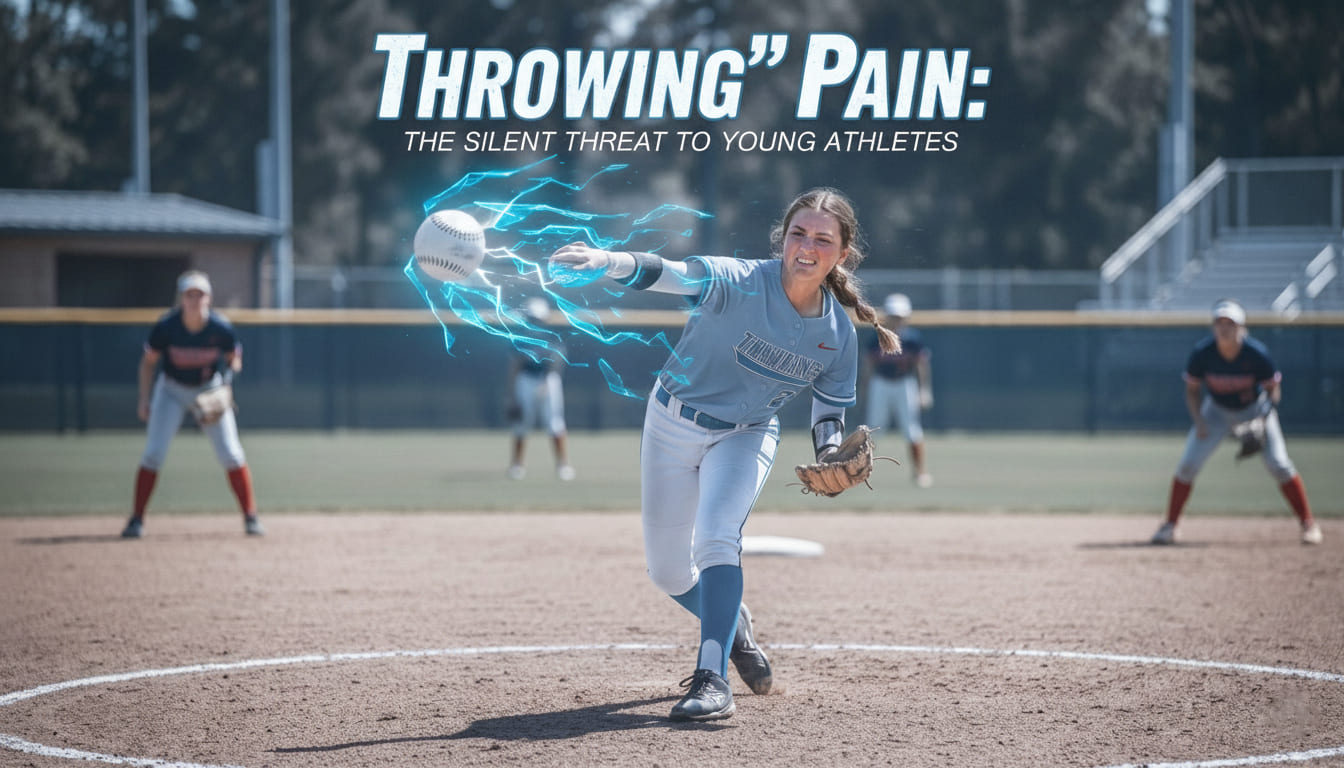
“In India today, almost 1 in 3 young athletes experience pain while throwing—especially cricket fast bowlers, javelin throwers, and baseball players. Many ignore the early warning signs thinking it’s normal soreness, but what they are actually experiencing is the beginning of Throwing Elbow Pain, which can silently worsen into ligament tears.”
“I’m Dr. Ponnanna K.M, Consultant Arthroscopy & Joint Replacement Surgeon. With years of treating young athletes in Bangalore and abroad, I’ve seen how early intervention can save a player’s career. My goal is to spread awareness so athletes and parents recognize the signs before the damage becomes serious.”
Understanding Throwing Pain in Young Athletes
Throwing is a high-speed movement that places enormous stress on the shoulder and elbow. When this force is repeated too frequently—without proper conditioning or rest—the soft tissues start to break down.
This is why throwing elbow pain is extremely common among young bowlers and pitchers.
Players often describe:
- Inner elbow pain during release
- Weakness after a few overs
- Sharp discomfort when accelerating the arm
- Loss of speed and control
This is not “normal pain”—it is the start of joint overload.
What Really Causes Pain When Throwing?
Many young athletes ask, “Why does my elbow hurt only when I throw?”
The reason is a combination of overuse and poor mechanics.
The common triggers include:
- Sudden increase in training load
- Weak rotator cuff and poor shoulder stability
- Open growth plates in young players
- Hyperextension during bowling
- Wrong landing foot position or trunk rotation
Even one wrong movement repeated many times can lead to ligament micro-tears.
Understanding the UCL — The Most Stressed Ligament in Throwers
The Ulnar Collateral Ligament (UCL) acts like the elbow’s internal stabilizer during high-speed throws.
When strained or partially torn, athletes feel:
- Deep inner elbow pain
- Pain during late cocking/acceleration
- A “pulling” sensation
- Gradual loss of throwing velocity
Left untreated, this can progress into a full tear requiring surgical reconstruction.
Non-Surgical Treatment for UCL Injury
Most young athletes do not need surgery. Early injuries respond extremely well to structured conservative care.
Non-surgical options include:
- Complete throwing rest for a few weeks
- Physiotherapy focused on the forearm and rotator cuff strength
- Flexibility training for the shoulder and elbow
- PRP injections for healing
- Biomechanics correction
- Gradual return-to-throwing program
This approach protects young elbows and prevents long-term damage.
When Surgery Becomes Necessary?
In some cases, especially for competitive athletes, surgery is the best path to restoring performance.
Surgery is considered when:
- MRI shows a high-grade or complete UCL tear
- The elbow feels unstable during throwing
- Pain persists after rehabilitation
- The player’s speed and accuracy drop consistently
For these cases, advanced UCL Injury Treatment such as repair with internal bracing or full reconstruction, may be recommended.
Athletes requiring detailed evaluation often seek a Tommy John Surgery Specialist in Bangalore for the best outcomes.
Advanced Imaging and Precision Treatment Approaches
Modern sports medicine relies heavily on technology to detect problems early.
Diagnostic tools may include:
- Dynamic ultrasound
- MRI or MR arthrogram
- Stress testing of the elbow
- Video-motion analysis during throwing
Treatment options range from:
- Conservative strengthening programs
- Pitch/bowling load control
- Growth plate protection techniques
- UCL repair with internal bracing
- Classic Tommy John reconstruction for complete tears
This multi-layered approach ensures athletes return safely and stronger than before.
How Dr. Ponnanna Treats Young Athletes With Throwing Injuries?
“My training in Bangalore, Pune, and Sydney taught me that no two throwing injuries are the same. The mechanics of fast bowling, javelin throw, and baseball pitching are completely different—and so is the stress placed on the elbow.”
“In Australia, I trained with sports-medicine specialists who treated professional cricket and baseball players. I learned how even subtle technique issues can generate repeated micro-trauma to the UCL and growth plates.”
“Today, my goal is simple: protect the athlete’s long-term career. I prefer non-surgical management whenever possible, but when surgery is required, I focus on techniques that improve stability, reduce recovery time, and support a structured return-to-sport plan.”
FAQs
1. Is Throwing Elbow Pain serious?
Yes. If ignored, it can progress into ligament tears and long-term instability.
2. Can UCL injuries heal without surgery?
Many early-stage injuries heal fully with rest, strengthening, and physio-guided rehab.
3. How long is recovery after UCL reconstruction?
Most athletes return to competitive throwing in 9–12 months.
4. Should children ignore mild elbow pain during sports?
No. Pain in young throwers must always be evaluated, especially with open growth plates.
5. Who treats cricket-related elbow and shoulder injuries?
An experienced Orthopedic Doctor for Cricket Injury Bangalore or a sports-injury specialist.
Patient Reviews
Nikhil S.
“My 14-year-old son had severe elbow pain from fast bowling. Dr. Ponnanna K.M diagnosed a UCL strain early and treated it without surgery.”
Ananya P.
“As a softball thrower, I struggled with accuracy. His rehab plan helped me return stronger.”
Rohan D.
“I had a partial UCL tear. Dr. Ponnanna’s guidance through surgery and rehab was exceptional.”
Throwing Elbow Pain is not just overuse—it is a warning sign. With accurate diagnosis, early intervention, and modern treatment options, athletes can return safely to sports without long-term loss of performance. Whether through conservative therapy or advanced reconstruction, the goal is always the same: protect the athlete’s future.
Young players, parents, and coaches must take throwing pain seriously—early evaluation prevents lifelong injury and supports strong, healthy athletic growth.
Opera Bone and Joint Clinic
#14, Ground Floor, 4th Main, 6th Cross, Malleswaram, Bangalore – 560003
📞 8951545276